

Travel, for Trevor James Wilson, isn’t a stamp collection—it’s a calling. The man has lived enough stories for three lifetimes, and yet he tells them with the humility of someone who still feels lucky to have a window seat. His memoir, Where Have I Been All My Life?, isn’t just a travelogue—it’s the story of a boy who grew up wandering postwar Europe, a banker who walked away from the corner office, and a man who discovered that the world doesn’t stop teaching us just because we hit retirement age.
 Trevor’s journey reads like the kind of adventure novel you’d assume was made up. As a boy, he watched Europe rebuild itself from ashes. As a man, he stood before the Berlin Wall when the air on each side carried a different kind of fear. Later, in his fifties, he traded his high-ranking banking job for something the world might call foolish but others might call faithful—a new life built around helping others see the world for the first time.
His stories are snapshots of the divine hiding in plain sight: a Swiss cow licking his leg, a ferry made from a chunk of Albanian road, a cross shining faintly through East Berlin’s gray sky. None of it sounds extraordinary until you realize that’s the point. Trevor found wonder where most people would have only seen inconvenience. He reminds us that the sacred often sneaks 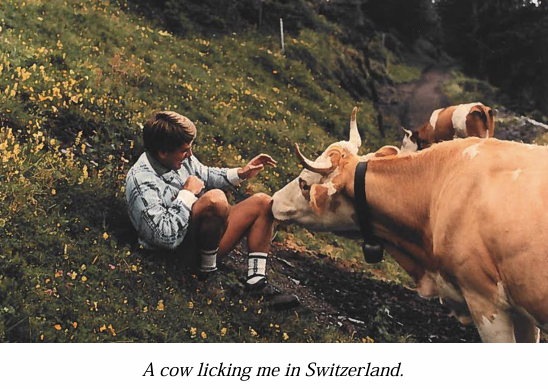 in disguised as the ordinary.
What stands out most isn’t the miles he’s traveled but the courage it took to keep saying yes. Trevor spent decades excelling at something that drained him, and when the time came, he walked away. Not for fame. Not for money. Simply to live honestly. In his fifties, he began designing tours for senior travelers—men and women who thought their exploring days were over. With Trevor, they weren’t. He’d hand them Swiss rail passes and tell them to find their own way to the next town. They did, and they came back glowing. That’s the magic he speaks of—the transformation that comes when you finally trade “someday” for “today.”
He’s quick to say that travel, like faith, requires humility. “Gratitude and listening,” he says, “are the best travel skills you can pack.” It’s easy to see why. He laughs about guessing languages on hiking trails, smiling his way through awkward encounters, and realizing that sometimes silence is the most fluent thing you can offer. He calls himself an “international citizen,” not as a trendy title but as a quiet practice of respect—learn the customs, honor the people, and remember you’re the guest.
The book takes a sobering turn when Trevor visits Auschwitz. There, among the worn shoes and silent halls, he pauses. He doesn’t rush the moment or try to explain it away. He bears witness. He insists the world must remember so that denial never wins. He’s not Jewish, but he’s human—and that’s reason enough to stand guard over truth.
Then, just as the weight becomes too heavy, Trevor brings us to Algeria, where two poor strangers give up their night to help him find safety. It’s these contrasts—the darkness of history against the kindness of strangers—that give his story its moral spine. He believes that travel isn’t just geography—it’s an education in grace. You learn to hold sorrow and beauty in the same hand without losing hope.
Today, Trevor lives with stage four kidney disease. But he doesn’t write or speak like a man defeated by time. He follows his doctors’ orders, sure—but he doesn’t let them dictate the tone of his days. “Laughter first,” he says, “then logistics.” He wrote his first book at eighty-four years old, not because he had time to kill, but because he had something worth saying.
His message is simple, yet profound: you don’t have to cross oceans to travel well. Take a new path through your own neighborhood. Ask questions that stretch your soul. Listen longer than feels natural. Say hello first. Every small act of openness redraws the map of your life.
Trevor James Wilson’s story isn’t about escaping—it’s about awakening. It’s a reminder that God’s world is wide and wild and worth seeing with fresh eyes, whether you’re in Switzerland or standing in your own driveway. The destination changes, but the lesson never does: courage isn’t a moment—it’s a lifestyle. And gratitude? That’s the passport that never expires.