

In March 2002, on a mountaintop in Afghanistan, Air Force Combat Controller John Chapman made the ultimate sacrifice in a battle that would later become clouded by controversy, misinformation, and institutional resistance to the truth. His story is not just about extraordinary heroism, but also about a family’s relentless pursuit of recognition for a fallen warrior whose actions were deliberately obscured.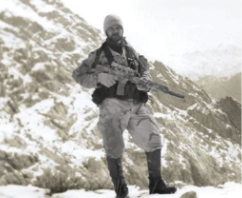
John Chapman wasn’t just a decorated warrior; he was a compassionate brother, son, and friend. His sister Lori Longfritz describes him as someone who, even as a child, demonstrated remarkable empathy – standing up to bullies, playing with disabled neighbors, and showing kindness to those who needed it most. This character formed the foundation of the man who would later demonstrate extraordinary courage under fire. As Lori shares these personal glimpses, we see beyond the uniform to the remarkable human being whose integrity defined his life and his final moments.
The battle on Takur Ghar Mountain began as part of a larger operation in the Shahi-Kot Valley. Chapman was embedded with a SEAL Team Six unit on a mission that Longfritz describes as “poorly planned” and “unnecessary.” When their helicopter came under fire while attempting to land, a SEAL named Neil Roberts fell from the aircraft. After regrouping, the team returned to rescue Roberts. During this second attempt, Chapman immediately engaged enemy bunkers upon landing, clearing the first one successfully. While attacking a second bunker, Chapman was wounded, and the SEAL team leader reported him as dead without confirming his status. The team then retreated, leaving Chapman behind.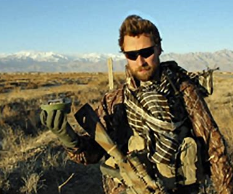
What happened next represents both the height of heroism and the depth of institutional failure. Unknown to his team, Chapman regained consciousness and continued fighting for over an hour – alone, wounded, and surrounded by enemy fighters. He even came on the radio multiple times trying to reach friendly forces. When a Quick Reaction Force arrived, Chapman left the safety of cover to provide suppressive fire, ultimately sacrificing his life to protect incoming troops. For years, this part of the story remained buried, disputed, and in some circles, deliberately suppressed.
The aftermath reveals a troubling pattern of institutional resistance to acknowledging what actually happened. Longfritz describes multiple attempts to upgrade Chapman’s Air Force Cross to the Medal of Honor being immediately shut down. At one point, when asked about pursuing the upgrade, a general responded,
“The Chapman family has been very easy to work with, so let’s not make waves.”
This statement confirmed for Longfritz that there was something more to the story being concealed.
The turning point came in 2014 when then-Secretary of the Air Force Deborah James, responding to a question about why no airman had received the Medal of Honor since Vietnam, tasked her staff with reviewing potential candidates. Chapman’s case rose to the top. Critical to the eventual recognition was video footage from both CIA drones and an AC-130 gunship that provided irrefutable evidence of Chapman’s continued fight after being left behind. Even then, Longfritz describes extraordinary efforts by certain SEAL leaders to block the award.
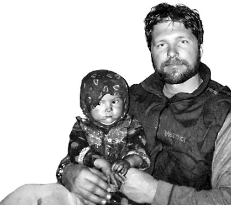 In 2018, sixteen years after his death, John Chapman was posthumously awarded the Medal of Honor. Remarkably, Longfritz reveals that shortly thereafter, the SEAL team leader who had left Chapman behind was also awarded the Medal of Honor for actions that Longfritz contends were actually performed by her brother.
This story transcends one battle or one hero. It speaks to broader questions about institutional accountability, the courage to face uncomfortable truths, and the responsibility we have to honor sacrifice properly. Lori Longfritz continues to advocate not just for her brother, but for all military families who deserve the unvarnished truth about their loved ones’ service and sacrifice. Through the First There Foundation, she now helps support combat controllers, military personnel, law enforcement, and first responders with mental health resources and other assistance.
John Chapman’s legacy lives on not just through his Medal of Honor, but through the continued fight for truth and accountability in how we honor those who serve. As Longfritz powerfully states,
“All we want is the truth. If our person was a hero, we want to know that too. We don’t want it to be suppressed.”
Watch or listen to this episode of Elsa Kurt Interviews here:
Watch:
Listen: